ERP for Pharmaceutical Manufacturing

What Is ERP for Pharmaceutical Manufacturing?
ERP for pharmaceutical manufacturing connects operational and financial processes through shared, current information, helping manufacturers coordinate production, improve traceability and maintain accessible records that support internal reviews and regulatory inspections.

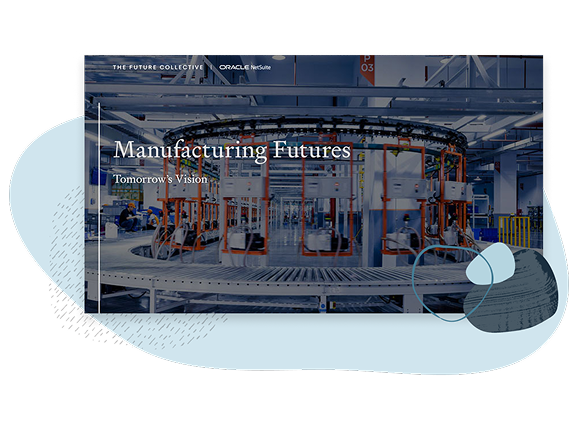
Manufacturing Futures: Tomorrow’s Vision
Manufacturing is being reshaped by rapid advances in AI, automation and connected operations. Businesses that adapt fastest will lead the new era. Discover how intelligent production, resilient supply chains and emerging value models are transforming manufacturing, while sustainability and data-driven decision-making redefine growth and performance.
Download our report to unlock new opportunities and stay ahead in an increasingly complex world.
Bring every batch, process and cost into one clear view
Control with clarity
NetSuite links production activity with inventory, purchasing and finance. Teams can trace materials and costs through each stage, identify shortages or variances sooner and make informed decisions using consistent information from across the business.

NetSuite ERP for Pharmaceutical Manufacturing features
NetSuite brings the processes behind pharmaceutical manufacturing together in a scalable cloud system.
Financial management
Automate accounting, consolidation and reporting while gaining a current view of production costs, margins and cash flow. Role-based dashboards help finance teams investigate variances, shorten the close and report across sites or legal entities.
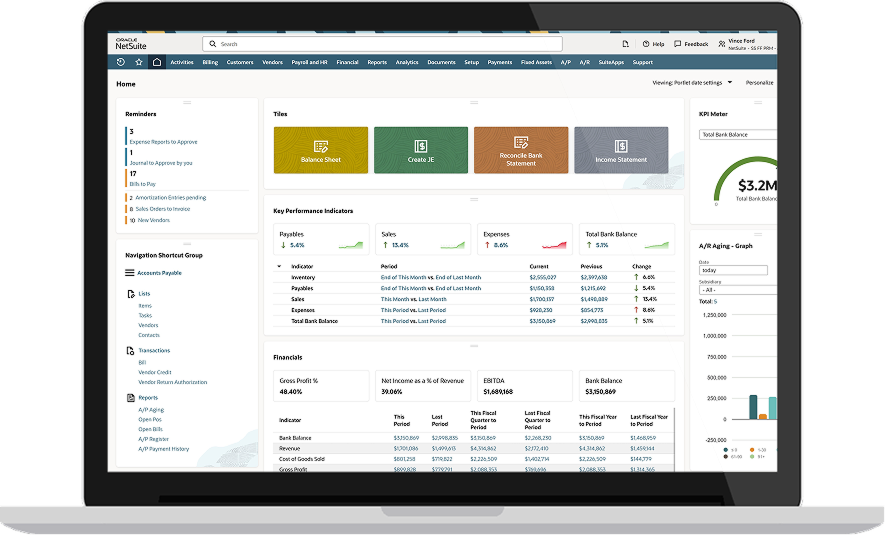
Quality and compliance controls
Configure inspections, quality workflows, approvals and audit trails around operating processes. Controlled access and traceable records help teams maintain consistent processes and provide supporting information during internal reviews and regulatory inspections.
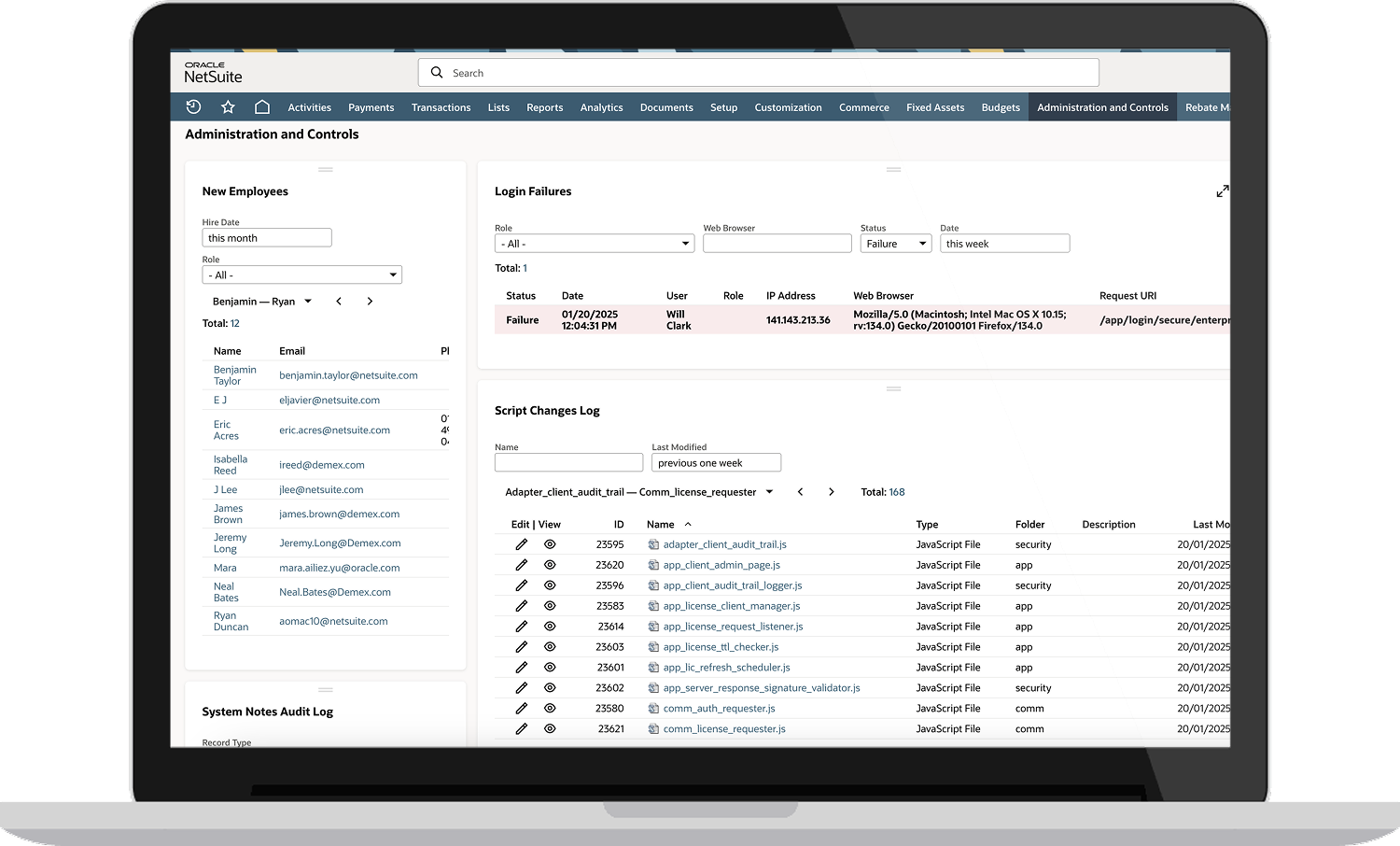
Batch and lot traceability
Trace ingredients and components forward into finished batches and trace finished products back through their source transactions. Detailed lot and transaction histories help teams investigate quality issues, assess potentially affected stock and support recall activity where required.
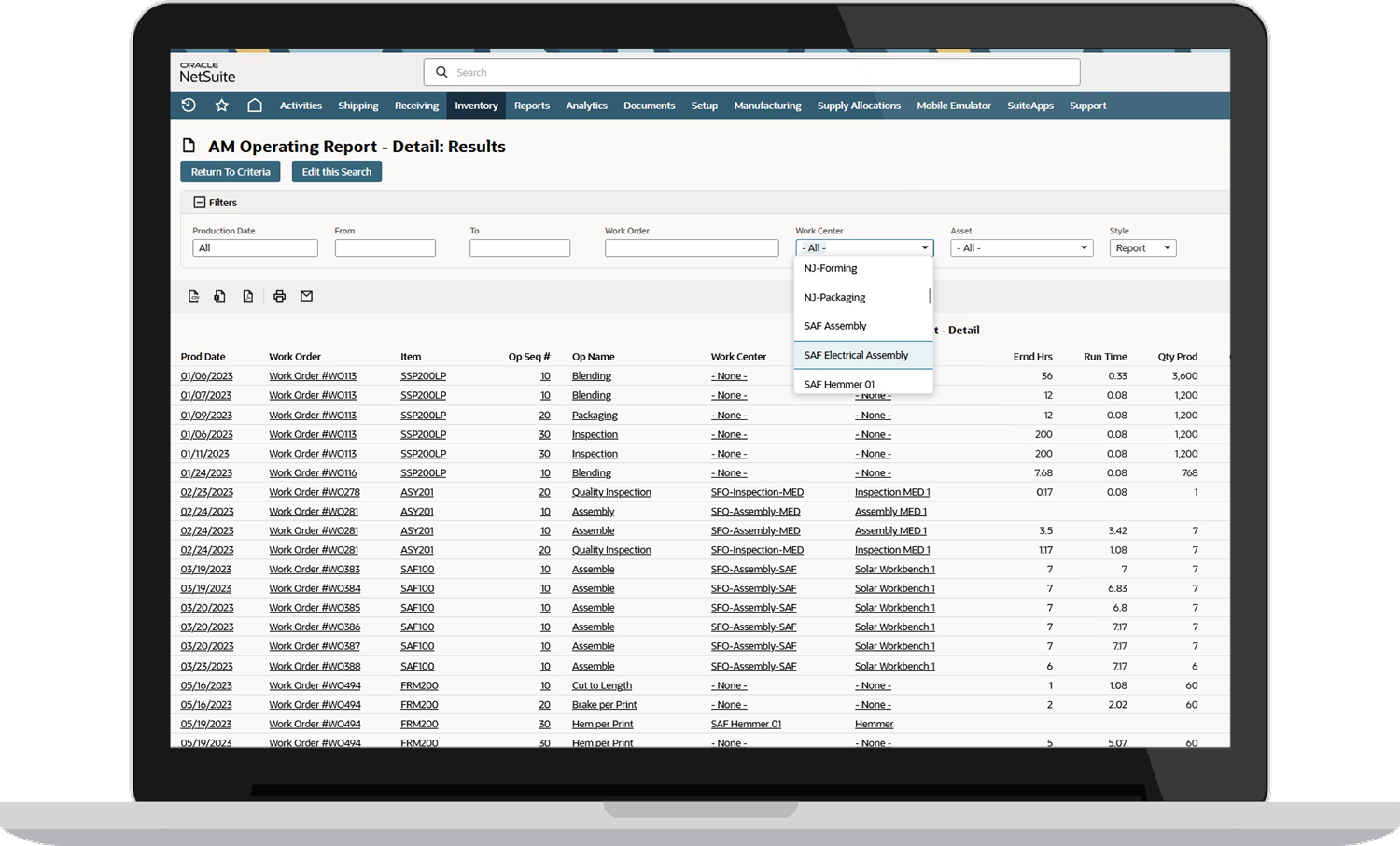
Inventory and procurement
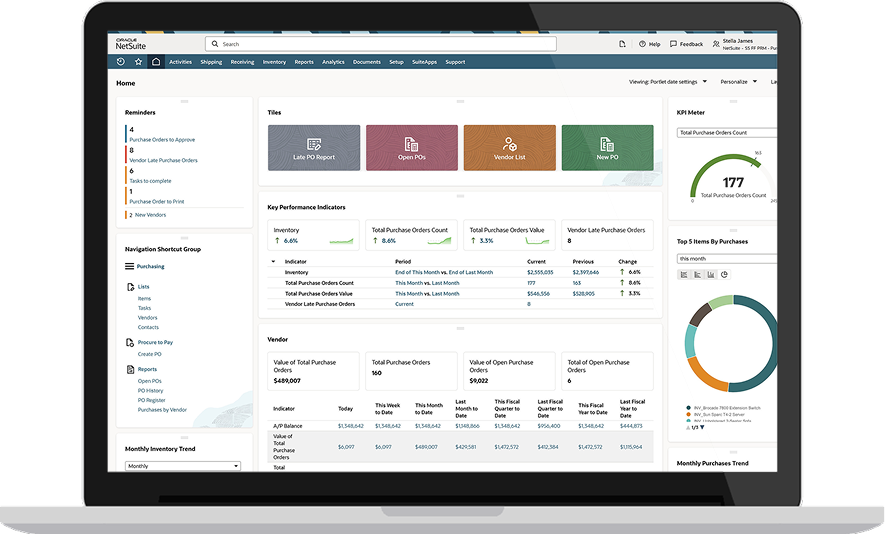
Monitor quantities, lots, expiry dates, locations, committed stock and material status across the business. Clearer visibility helps planners distinguish usable inventory from stock awaiting inspection, release or disposition, while automated replenishment and purchasing workflows help reduce shortages and excess holdings.
Production planning and MRP
Turn forecasts and sales demand into material and production plans. NetSuite MRP considers available stock, lead times, bills of materials and open orders, helping planners respond earlier to supply constraints, changing demand and inventory availability.
R&D and project costing
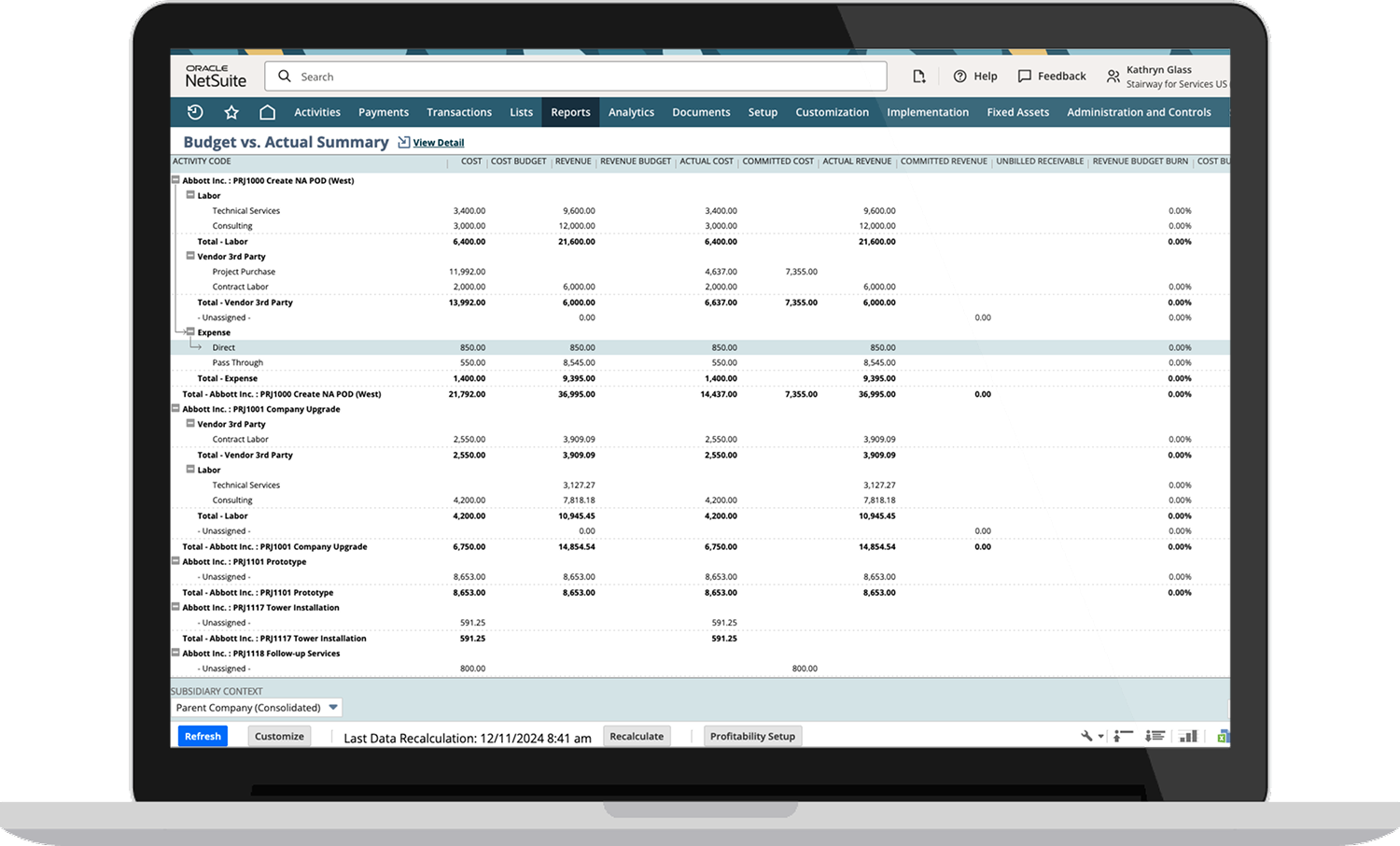
Track budgets, purchasing, labour and other costs associated with research, product development and technology-transfer projects. Shared dashboards give finance and project teams a consistent view of spending, commitments and progress.
Global business management
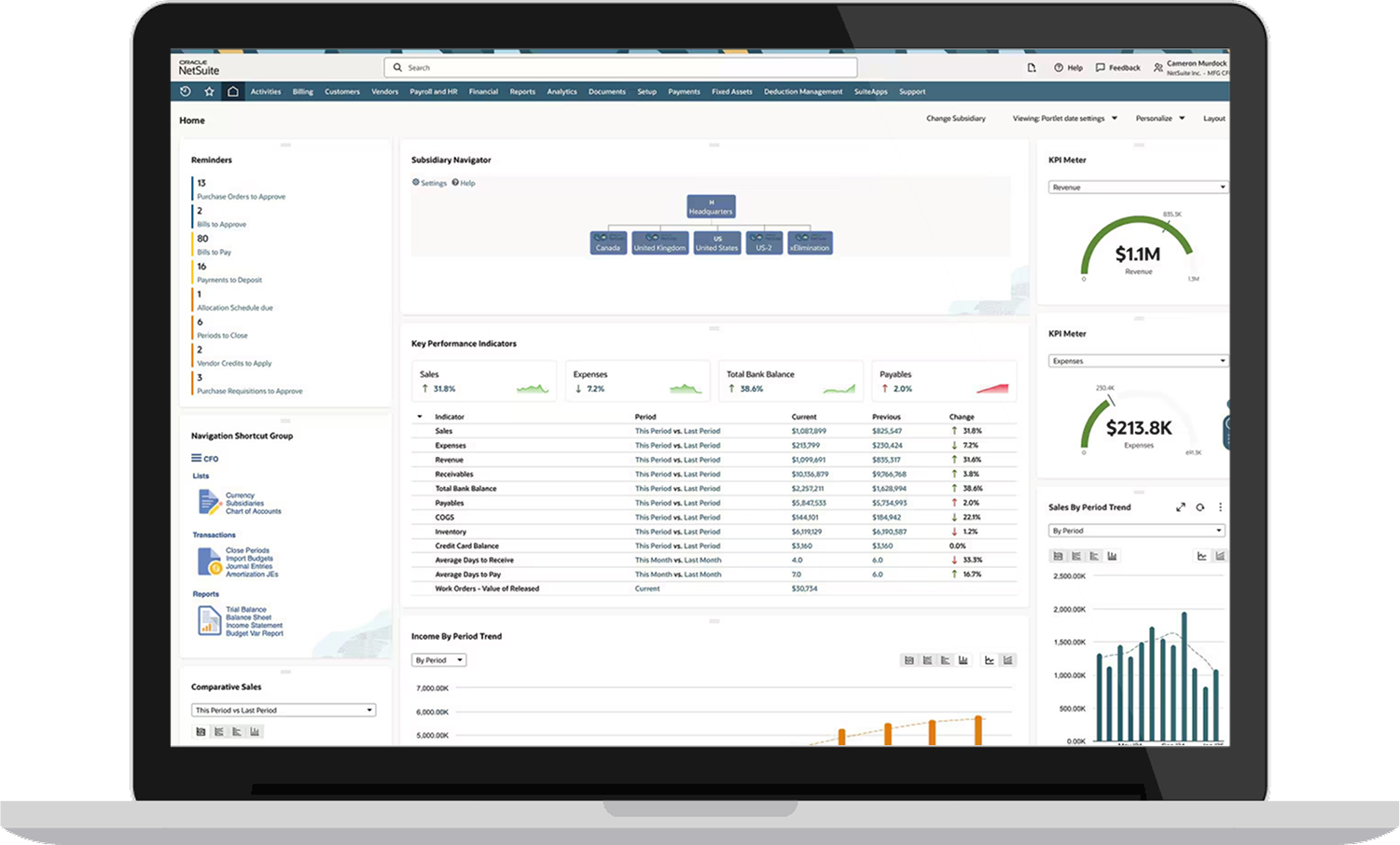
Manage subsidiaries, currencies, tax requirements and intercompany activity in one system. NetSuite OneWorld supports consolidated reporting while allowing pharmaceutical businesses to retain the local processes needed for different sites and markets.

Learn how ERP can improve your business
Free Product Tour(opens in a new tab)
NetSuite gives us meaningful data rather than what we had before which was really guesswork. Now we work less hard but make more money.
NetSuite ERP for Pharmaceutical Manufacturing benefits

Challenges NetSuite ERP for Pharmaceutical Manufacturing solves

SuiteSuccess – A proven path to success
Leveraging more than 25 years of experience working with tens of thousands of organisations, across all industries and business sizes, our SuiteSuccess customer lifecycle methodology helps customers transform their business. It starts by building an AI-powered, integrated business suite with industry-specific solutions. Then we engage with your business to ensure that we’re addressing your specific needs and guiding you along the way on how to best consume and optimise NetSuite to solve challenges of today and the future. This approach helps ensure customers experience faster time-to-value, better ROI and greater employee adoption.
Learn more
How much does NetSuite ERP for Pharmaceutical Manufacturing cost?
Companies of every size, from pre-revenue startups to fast-growing businesses, have made the move to NetSuite. Looking for a better way to run your business but wondering about the cost?
Users subscribe to NetSuite for an annual fee. Your licence is made up of three main components: core platform, optional modules and number of users. There is also a one-time implementation fee for initial setup. As your business grows, you can easily activate new modules and add users — that’s the beauty of cloud software.
Contact NetSuite Now(opens in new tab)See NetSuite ERP for Pharmaceutical Manufacturing in action here(opens in a new tab).
Resources




Please note that some capabilities described on this page require partner integrations.