
A healthcare budget has to account for competing priorities: enough staff to deliver safe patient care, rising supplier costs and investment in equipment and facilities. For healthcare providers, the challenge is deciding how to fund those needs when budgets are limited and financial pressures can change throughout the year. That makes budgeting about more than forecasting income and expenditure.
This guide explains how healthcare budgeting works, the main types of budgets used, the challenges finance teams face, and how technology and effective budgeting practices can support more accurate planning and financial control.
What Is Budgeting in Healthcare Management?
Budgeting in healthcare management is the process of planning, allocating and controlling a care provider’s financial resources. The intent is to deliver high-quality patient care while meeting operational and strategic goals.
Like budgeting in other industries, healthcare budgeting brings together revenue projections, staffing, supply costs and capital needs into a broad plan that leadership reviews and adjusts throughout the year. However, healthcare budgets differ because so much of costs and revenue are outside the organisation’s direct control. Staffing levels must follow clinical safety requirements, while drug and consumable prices and procurement decisions evolve alongside global supply markets and quality standards. Revenue depends on contracts, National Health Service (NHS) payment schemes and reimbursement schedules set by national bodies.
Key Takeaways
- Healthcare budgets are used to plan and control the financial resources that help organisations care for patients while remaining solvent.
- Operating, capital, cash, flexible, rolling and zero-based budgets each serve a different planning purpose, and most organisations use several at once.
- Staffing, reimbursement, supply costs and capital investments typically create the most budget volatility.
- A disciplined budgeting process starts with clear organisational and service-line goals and runs long after the initial budget is set.
- Integrated systems and built-in finance tools can help staff catch and respond to variances before they experience severe budget drift.
Budgeting in Healthcare Management Explained
In the UK, a provider’s budget size and structure depend on its type and reporting needs. NHS trusts work within a national oversight system and follow regular reporting requirements set by NHS England and the local integrated care board (ICB) for financial performance, access and outcomes. Independent organisations, such as hospital groups or private clinics, have more flexibility, and their budgets often revolve around fee schedules, insurer contracts, internal targets and occupancy rates. Both NHS and independent providers must account for operating costs such as staff pay, medicines, energy and medical equipment. However, differences in how they receive funding and manage their finances affect how they plan for these costs and respond when spending exceeds expectations.
In either case, budgeting is rarely handled by the finance department alone. Clinical directors forecast patient volumes and staffing needs, procurement teams model supply costs, billing departments estimate revenue and operations managers raise capacity constraints before a plan ever reaches the board. Although providers often plan around an annual financial year, many also update their forecasts throughout the year as costs, patient demand and funding arrangements change. This approach helps finance teams identify pressures and adjust plans without waiting for the next annual budget cycle.
Why Is Budgeting Important in Healthcare Management?
Healthcare budgets turn vague or idealistic strategies into real spending plans that providers can follow to achieve their goals. Without a budget, decisions like hiring additional nursing staff or replacing a diagnostic machine may compete for limited available funds. Budgets help clearly establish the organisation’s top priorities or what it can afford so those funds can be directed where they’re needed most.
Budgeting also helps boards, regulators and investors assess whether an organisation is managing its finances responsibly and meeting its financial targets. NHS trusts report against their budgeted position on an ongoing basis, and a trust running over plan can’t assume that NHS England will cover the shortfall. Independent providers face similar discipline from lenders and investors who expect budgets to hold up against the occupancy and fee schedule assumptions behind them. For both types of provider, comparing actual income and expenditure with the budget helps finance teams identify variances, investigate overspending and decide where plans may need to change.
What Are the Main Types of Healthcare Budgets?
Most healthcare organisations rely on several budgets at once, and they vary by type and depth. A hospital, for instance, might run an annual operating budget for day-to-day spend, a multi-year capital budget for equipment and facilities, and a rolling budget refreshed every quarter to keep up with changing prices. The right mix depends on how patient volumes and expenses shift from one financial period to the next.
-
Operating Budget
An operating budget covers day-to-day costs, including staff pay, drugs, consumables, utilities and administrative overhead. These budgets set forecasted expenses against expected patient revenue, typically for the year, and are usually broken down by department or service line. That way, managers have a spending ceiling to work with and a baseline to measure performance.
-
Capital Budget
A capital budget funds large, long-term investments such as new buildings and equipment. These projects typically span several years rather than a single financial cycle, so healthcare organisations usually score and rank proposals based on strategic priorities, expected benefits and asset life before committing funds to investments that may take years to deliver a return.
-
Cash Budget
A cash budget tracks the timing of money inflows and outflows, which usually follow different timelines than the revenue and expense figures in an operating budget. Large gaps in cash flow stemming from factors like reimbursement delays or seasonal patient fluctuations can leave a provider that’s profitable on paper without enough cash to cover payroll and unexpected supply runs.
-
Flexible Budget
A flexible budget adjusts spending targets throughout the period as actual patient volume and activity data comes in. Unified business software, such as an enterprise resource planning (ERP) system, can be used to integrate multiple incoming data sources, such as scheduled appointments and pending procurement orders. AI-powered analytics tools can then use this information to make real-time suggestions on spend and generate forecasts that keep budgets aligned with reality. A provider’s variable costs, including drugs and agency staffing, change with demand, so variance reports help teams differentiate between a busier-than-expected month and a budget failure.
-
Rolling Budget
A rolling budget is regularly updated to extend the planning period by adding a new month, quarter or other defined period as the current one ends. For example, a six-month rolling budget drafted in January initially covers January through June. At the end of January, the organisation reviews its figures and extends the budget through July, maintaining a six-month view of planned income and expenditure. Healthcare finance teams can pair this approach with their annual budget to update spending plans as costs, patient demand and funding expectations change throughout the year.
-
Zero-Based Budget
A zero-based budget requires each department to justify its spending from scratch every cycle instead of adjusting the prior year’s figures. Although this approach takes more time to prepare than automatically carrying forward previous spending levels, it can reveal unnecessary spending that persists out of habit or is based on old, outdated workflows. To offset some of the manual work that slows down zero-based budgeting, AI agents trained on financial data can be used to compare budgets over different periods and generate spending reports.
How Does the Healthcare Budgeting Process Work?
Healthcare providers typically develop budgets for a defined financial period, often a year, and review financial performance throughout that period. The process involves planning and approving spending, monitoring actual income and expenditure, and updating forecasts as circumstances change. Providers can follow the steps below to develop the basis for an approved, monitored budget, then make tweaks to the process as needed. More frequent adjustments may be necessary during times when tighter financial control is warranted, such as inflationary periods or public health events.
- Set organisational and service-line goals. Leadership first defines what the organisation wants to achieve in the coming year. For example, a hospital may plan to expand a specific service next quarter, or a practice might want to reduce its wait time by 40% within the year. Each goal should have a measurable outcome and a target date, giving finance teams a clear basis for estimating the resources needed and tracking progress against the plan.
- Gather financial and operational data. Budgets rely on diverse data from multiple departments. Finance teams might pull prior-year actuals, as well as current contracts and reimbursement schedules, while clinical teams provide patient volume trends and staffing rosters to keep the budget grounded in reality.
- Build revenue, staffing and expense assumptions. The team can now combine the organisation’s goals and records to translate assumptions into numbers: projected revenue comes from patient volumes and payer mix, for instance, while expenses are based on staffing ratios and supply needs. These assumptions create the foundation for the entire budget, so most teams stress-test them and create best-case/worst-case scenarios before finalising figures.
- Review, approve and assign accountability. Department heads, finance leadership, the board and any other relevant stakeholders review the draft budget and sign off or adjust where assumptions look unrealistic. An explicit approval process also assigns ownership by giving each budget line a named manager responsible for performance.
- Monitor variances and adjust forecasts. Once the budget goes live, finance teams compare actual results against plans at regular intervals. Many teams use accounting software with built-in AI features to quickly compare variances and budget items that deviate from plan, and that in turn helps finance teams update forecasts before spending issues spread. These variances also feed into rolling forecasts to keep outlooks as current as possible.
Finance Futures: Tomorrow’s Vision

Key Challenges in Healthcare Budgeting and How to Address Them
Healthcare budgets face myriad pressures, including high labour costs, slow reimbursements, rising supply costs, ageing infrastructure, long capital investment cycles and outdated data driving decisions. The following sections cover five areas that most often cause actual financial performance to diverge from budget.
Staffing Volatility and Labour Costs
Pay and related employment costs are often the biggest line item in a budget, shaped by regulations such as the National Living Wage and employer National Insurance contributions. Analysis by healthcare think tank Nuffield Trust puts workforce costs at around 75% of NHS provider expenditure, so even small shifts in the factors providers can control, including agency usage or overtime, can have a big impact on a budget. Private providers face this problem, too. Safe staffing ratios and wage competition limit how far labour costs can fall, even when bed occupancy is low.
Reimbursement, Revenue and Cash-Flow Uncertainty
Reimbursement tends to move slower than costs. Each year, the NHS Payment Scheme sets a cost uplift for providers (3.24% in 2026/27), but that figure is usually fixed in advance and can differ from actual inflation figures. If inflation outpaces reimbursement, providers are left absorbing the difference. Similarly, payment timing can impact cash flow, as insurer and self-pay billing cycles can run weeks or months behind delivered care. When that happens, revenue is recognised long before the cash arrives, even as obligations such as payroll continue on schedule.
Supply Price Inflation and Procurement Pressure
Drug and consumable prices depend on global supply markets that no single hospital or clinic can control, and shortages of critical supplies can lead to rushed shipments and force providers to switch to a more expensive alternative, especially during public health events when demand is high. Energy costs create additional strain, particularly for providers with large clinical sites that run equipment, lighting, sterilisation and climate control around the clock. Price hikes in both categories may pop up mid-cycle, often with little warning and well after the initial annual budget was approved.
Capital Investment and Ageing Infrastructure
Much of the UK’s healthcare infrastructure is old and in need of major maintenance or replacement. NHS England’s Estates Returns Information Collection put backlog maintenance at £15.9 billion for the 2024/25 financial year, as reported in October 2025, and every unaddressed repair has the potential to be more expensive down the line. For independent providers, major projects such as renovating an MRI suite or operating theatre can take up a substantial share of the available capital budget. Providers often need to make hard choices about sequencing projects that would all, in isolation, be considered necessary.
Disconnected Data and Delayed Variance Reporting
NHS England’s Digital Maturity Assessment found that, as of June 2025, 93% of providers use Electronic Patient Records (EPRs), but only 30% “have fully integrated bi-directional data flows” with other clinical and financial platforms. That gap means that while data might be accessible, it may also be out of date, and a budget variance in staffing or procurement could potentially go unnoticed for weeks.
Facing pressure to make every pound count? Find inspiration for your next financial management improvement in NetSuite’s healthcare customer stories.
Best Practices for Healthcare Budget Management
Good budget management can help determine whether an organisation has the financial flexibility to fund growth or struggles to cover its operating costs, even when two organisations have similar cash inflows and outflows. These following best practices aim to limit the impact of unpredictable swings in costs and reimbursement timing on overall financial strategy.
- Align budgets with organisational and service-line priorities. A budget that’s just a copy-paste of last year’s figures with some marginal adjustments might not align with either the current market conditions or the company’s current goals. Explicitly tying each budget line to a stated priority, such as reducing a specific waiting list or opening a new clinic, makes it easier to justify funding decisions when departments compete for the same limited pool of funds.
- Use realistic, driver-based assumptions. Base budgets on factors that directly affect costs and income, such as patient volumes, staffing levels, pay rates and supplier prices. Using current data to estimate these drivers helps teams set realistic targets and anticipate potential cost pressures.
- Involve clinical, operational and finance stakeholders. Finance teams might not have full visibility into staffing rosters or patient acuity, while clinical leads may lack insight into the organisation’s overall financial position. Involving teams from both sides of the equation in the budgeting process lets staff hash out issues before committing any money.
- Use scenario planning and rolling forecasts. A single budget built on one set of assumptions may struggle to adapt when patient volumes, reimbursement rates, pay awards or supply costs land differently than expected. Modelling multiple paths, such as best-case, base-case, worst-case and most likely scenarios, at the start and refreshing a rolling forecast every month or quarter helps teams track which scenario is playing out.
- Review variances regularly and assign accountability. A quarterly variance report gives a department three months to drift without anyone outside of finance noticing. Monthly variance reviews with named managers held accountable can catch problems faster, while there’s still time to turn them around.
How Technology Supports Healthcare Budgeting
For many providers, even rolling forecasts still run on spreadsheets, meaning an analyst has to pull data from several systems and reconcile everything manually each month. With the right technology stack and implementation strategy, organisations can simplify their budgeting cycle and create more accurate and agile financial strategies. Technology can be used to:
- Create a connected financial and operational data foundation. Budgets often pull from separate clinical, procurement, HR and finance systems, and each system update on its own schedule. Bringing general ledger, payroll, patient volume and supply data into one integrated ERP means a variance shows up the same day it happens, and any impacted department can more readily adjust to compensate.
- Automate data consolidation and budget workflows. Automated workflows route submissions for review, identify inconsistencies against prior actuals, roll everything into a single consolidated view and produce a board-ready budget without manual spreadsheet rebuilds.
- Improve forecasting with predictive analytics and AI assistance. Predictive models and AI trained on historical patient volumes, seasonal trends, staffing patterns and reimbursement timing can help finance teams spot potential deviations before they show up in reports. Generative AI tools can then offer digestible explanations of what’s driving a forecast change in language tailored to the user. This way, a department head doesn’t need a finance background to understand why next quarter’s number moved, while the finance team can use the same tool to do a deep dive into any data that warrants investigation.
- Provide role-based dashboards for timely budget visibility. A ward manager, a procurement specialist, a service-line director and a CFO each need different analyses of the same budget data, with specific trends and their own list of healthcare key performance indicators. Role-based dashboards show each user the figures relevant to their decisions, and users can configure their dashboards to show the data they reference most often.
- Strengthen governance, controls and audit trails. Spreadsheet-based budgets can’t always show who changed a figure, when they changed it or why, which makes each figure challenging, if not impossible, to reconstruct months later. A connected system logs every edit and approval automatically to give auditors, regulators and boards a clear record for every budget.
Strengthen Healthcare Financial Planning with NetSuite
Healthcare finance teams feel the pressure of every department at once: volatile staffing costs, reimbursement that lags real-world inflation, rising supply prices, ageing capital needs and financial and operational data spread throughout separate systems. To help address these challenges, NetSuite Healthcare Accounting Software runs budgeting and forecasting with the same real-time financial data the organisation uses for day-to-day accounting, so a staffing variance or a supply cost increase updates the forecast the moment it posts. Built-in tools such as Intelligent Performance Management help teams identify variance patterns and trends automatically, while Narrative Reporting turns the numbers behind each variance into a plain-language explainer a non-finance reader can follow. And with role-based dashboards hosted on the cloud, every user, from the CFO to a department manager, can see the real-time figures that matter most to them.
NetSuite’s Healthcare Accounting Dashboard
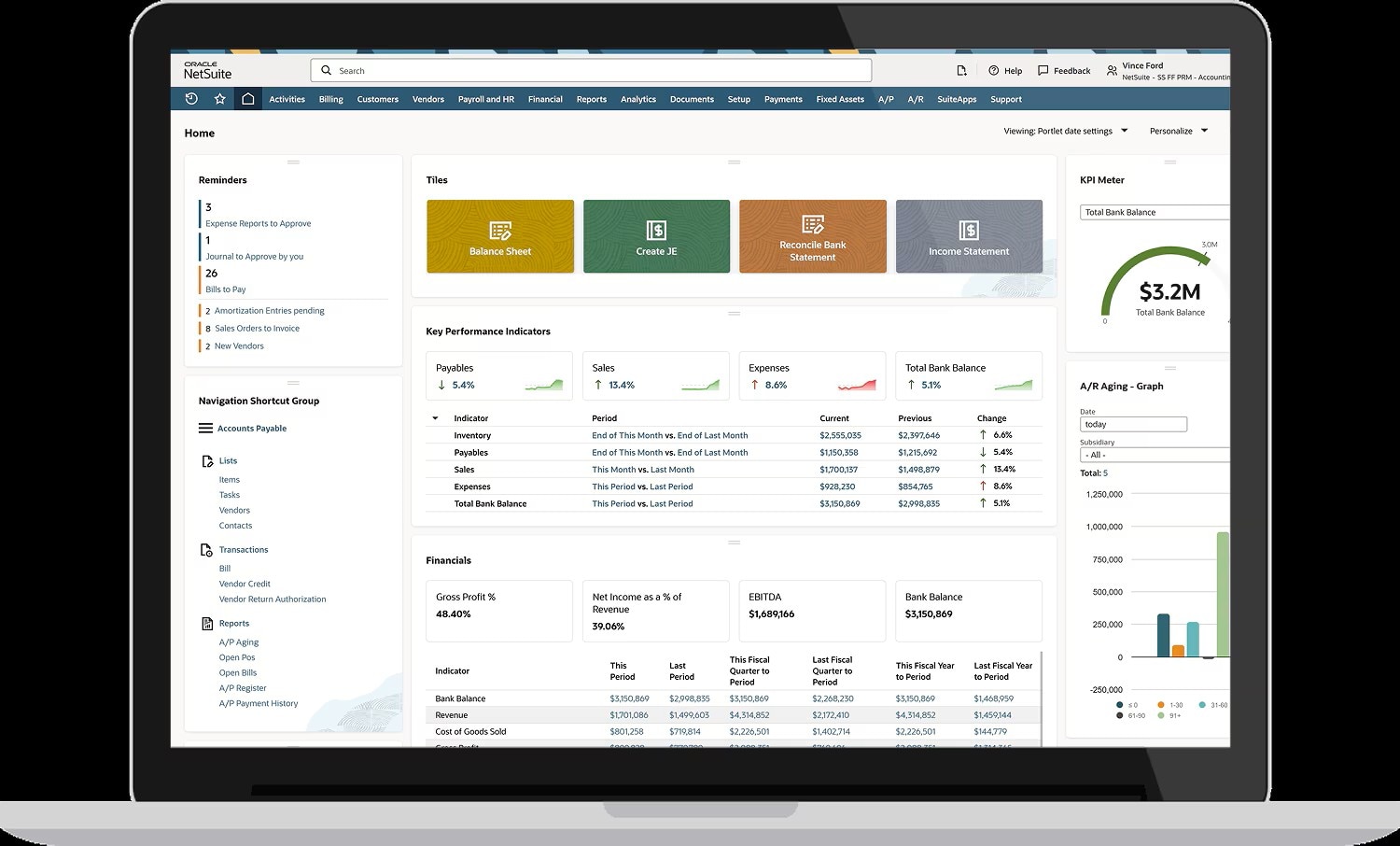
See what’s possible beyond spreadsheets. Discover the experiences of healthcare organisations using NetSuite.
Healthcare budgeting still has the same basic purpose it has always had: turning patient care goals into a financial plan an organisation can sustain and deliver on. But as regulations tighten and funding models become more complex, any financial plan has to account for volatile staffing costs, inconsistent reimbursement timing, rising supply prices and capital backlogs all moving on their own schedule, distinct from the budget’s. The providers that navigate these challenges well are usually the ones whose data, forecasts, technology and accountability structures move at the same speed, or faster, than the conditions they’re tracking.
Budgeting in Healthcare Management FAQs
What are the main types of healthcare budgets?
Healthcare organisations typically use three types of budgets: operating, capital and rolling. Operating budgets cover the day-to-day revenue and expenses; capital budgets focus on long-term assets and investments; rolling budgets are evolving documents that extend the runway of a budget as financial periods end and results come in. Most providers rely on a combination of the three alongside other types of budgets, including cash-based budgets tied to actual payments, flexible budgets that teams adjust over time and zero-based budgets that are built from the ground up every period.
What is the difference between a flexible budget and a rolling budget?
A flexible budget adjusts its spending targets based on incoming data, such as patient volumes or activity levels, within a fixed period, while a rolling budget extends the planning horizon itself by adding a new month or quarter as each period closes. A flexible budget helps teams assess whether spending is appropriate for actual activity; the second makes sure teams always have a forward-looking plan.