
Running an investment bank has rarely demanded so much on so many fronts. The rules change faster than firms can absorb them. Deal volume is down, and the ones that remain are high-stakes affairs, fought over by banks and private capital funds. Good people are tough to hold on to, and good clients are, too. And even as technology innovations such as generative AI (GenAI) are helping bankers keep their competitive edge, they add a new set of risks. Any one of these issues would keep a leadership team busy. Together, they create an extremely difficult environment, one the industry is learning to respond to.
Key Takeaways
- The fiercest competition for investment banks increasingly comes from private capital funds and boutique firms rather than rival banks.
- Regulatory compliance now eats up a significant chunk of a UK financial firm’s operating costs due to the volume and fluctuation of compliance requirements.
- AI is taking over junior-level scut work, yet ever-more discerning clients still call for human judgement.
- Banker burnout has proved stubborn, and AI hasn’t solved it. Firms must reconsider workforce engagement and cultural habits.
- The firms leading the charge are rethinking how the business runs, not patching one problem at a time.
Changes in Investment Banking Are Driving New Challenges
Investment banking has never been an easy line of work. The pressure to keep up with the competition and the regulations has always been brutal. And investment banker hours are the stuff of legends. These challenges are as valid today as they were a generation ago. Back then, though, a bank could take a few things for granted. Companies raised their money in the public markets, and competitors were other banks. Institutions depended on an army of eager junior bankers to get the grunt work done. Most critically, bankers of yore could count on consistency. The rules of engagement and regulatory regimes evolved slowly.
That old world is long gone, meaning today’s investment bankers must put their obsolete playbooks in the rubbish bin. Technology has accelerated the pace of change in banking for a while now, one of several investment banking trends rewriting how the business works. Each advance in computing makes the business run faster and change sooner, but GenAI is the fastest acting catalyst yet. Barely in the building three years ago, GenAI now handles the document review and first-draft modelling that used to define a junior banker’s week. That unsettles analysts’ expected career paths, which makes retaining good people harder than ever. Clients feel it too, with little patience for a bank that takes three days to answer what they get instantly everywhere else.
All that digital plumbing adds significant risk, everything from cyberattacks to broader operational risk, which has regulators on full alert. The compliance rulebook that once moved over years now changes by the quarter; keeping up has become a permanent job, not an occasional project.
Underneath it all, money is changing hands differently, and this may be the deepest change of the lot. Capital that once flowed through public markets now goes to private equity and private credit funds that lend and invest directly, so banks must now compete for the deals that were once theirs by default. Plus, much of what remains is leaving London for other global pools of capital, while higher interest rates make the won deals harder to finance. For UK banks, it adds up to fewer public mandates and thinner margins in a home market fighting to hold its place.
Finance Futures: Tomorrow’s Vision

9 Major Investment Banking Challenges
The nine major investment banking challenges are regulatory pressure, economic shifts, talent burnout, competition, digital transformation, complex client demands, margin compression, cyber threats and ESG expectations. Some arise from markets and regulation; others come from a bank’s people and systems.
-
Regulatory Pressure
Regulatory scrutiny is the cost that never stops climbing. Compliance now costs the UK financial services sector an estimated £33.9 billion a year, more than 13% of the average firm’s annual operating costs, and 84% of compliance leaders say that figure has grown over the past five years. Part of the reason is the sheer number of new rules landing at once. Basel 3.1 arrives in 2027 with a new way of calculating capital against risk, operational resilience rules are already binding, and firms with one foot in Europe now answer to the EU’s Digital Operational Resilience Act (DORA) regime on top of the UK’s own. Each new rule brings new reporting, and none of the old ones go away. The real pressure comes not from any single regulation change; it’s the tangle of tracking all of them at once, which falls hardest on smaller firms without armies of compliance staff.
-
Economic Shifts
Investment banking revenue rises and falls with the deal cycle, and lately the cycle has sent mixed signals. UK financial services M&A looked buoyant on paper in 2025, with disclosed deal value nearly doubling to £38 billion. The aggregate hides a downshift in volume, though. The number of deals fell to 337, down from a record 378 the year before, and value pooled into a dozen transactions worth more than £1 billion apiece. Fewer, larger deals concentrate the fees at the top and thin out the steady midmarket flow most firms rely on. Throw in interest rates and geopolitics that can freeze a pipeline overnight, and revenue gets much harder to plan.
-
Talent Burnout
Burnout is a stubborn problem for investment banks, and it appears impervious to protected weekends, workload caps and offloading mundane tasks to GenAI. That’s because they can’t fix the underlying causes of a banker’s long hours: client deadlines that don’t move, live deals that flare up at midnight and a culture that treats constant availability as proof of commitment. AI might draft decks faster and automate analysis, but whatever time it saves tends to get absorbed by higher expectations. The hope is AI finally cracks this nut, but so far, faster tools mostly raise the bar rather than lighten the load.
-
Maintaining a Competitive Edge
Private capital funds now lend and advise on deals that once ran through investment banks, and they have the size to do it: global private credit assets under management (AUM) approached £2 trillion in 2025. Independent advisory boutiques peel off senior bankers with M&A experience by offering a tighter scope of work rather than a full-service menu. And a deep bench of UK fintechs competes for slices of the value chain that banks once owned outright. Rather than size and a storied name, the edge now goes to firms that know a sector or a client better than anyone else and can turn data into faster, better-informed advice.
-
Digital Transformation
Underneath a bank's fleet of new apps and AI pilots is likely a labyrinth of legacy tech that keeps meaningful digital transformation at bay. Decades of systems, piled up over time and multiplied by mergers, often mean trading, risk, finance and client records run on separate platforms cobbled together with middleware and manual workarounds. Answering straightforward questions can mean stitching numbers together by hand from half a dozen systems. Banks spend significant time and money keeping old systems running, even though working from newer, cleaner ERP foundations can consolidate and speed up required reporting.
-
Complex Client Demands
An investment bank’s clients have grown more capable and more demanding. A corporate treasury team or private equity sponsor now runs its own analyses and data tools, so it knows the market and expects the bank to bring something new. That sets a higher standard on every front. Clients want faster turnarounds on financing and deals. They expect to meet with senior bankers rather than juniors. They want advice built around their exact situation, not a pitch dusted off from the last deal. And they increasingly expect consistent service, rather than being handed off between teams that don’t share information.
-
Margin Compression
“Busy” doesn’t necessarily translate into “successful” for an investment bank. Fees are softening as clients with internal analysts push back on pricing. And rivals are always ready to undercut for the win. At the same time, almost everything on the cost side is getting more expensive. Compliance takes an ever-larger share of the budget, and technology demands constant investment just to stand still. On top of that, the fight to keep good people keeps compensation high. These pressures are coming together to squeeze margins; even when a bank is maintaining deal volume, each one earns less.
-
Increasing Cyber Threats
Because they guard money and information that moves between markets, few businesses are more tempting targets for cyber attackers than investment banks. The National Cyber Security Centre says it handles four nationally significant attacks each week on average, and the number of serious incidents rises each year. Ransomware remains a disruptive threat to banks; the average ransom demand rose 51% in 2024 to 67% in 2025. Banks are exposed to threats through both their own systems and the third parties and suppliers wired into them. A single breach can leak confidential information or halt trading, and the damage to client trust can outlast the technical fix by years.
-
ESG and Sustainability Expectations
Environmental, social and governance (ESG) sustainability cuts two ways for a bank. Clients and investors want green and ESG transition-linked products. At the same time, regulators have tightened what a firm can claim about their sustainability efforts. The Financial Conduct Authority’s (FCA) anti-greenwashing rule has been in force since 2024, and its Sustainability Disclosure Requirements will apply to any asset manager with £5 billion or more in AUM starting December 2026. The rules are still moving, too, with the FCA pausing its plan to extend the regime to portfolio managers after industry pushback. Add a political mood that has cooled on ESG in some markets, and banks are left threading a needle: claim too much, and they risk a greenwashing penalty and the reputational hit that follows. Say too little and they may risk losing clients with high expectations for ESG.
3 Mitigation Strategies for Investment Banks
The nine challenges may feel daunting as a list, but banks are far from powerless against them. The firms coping best treat this as a moment to rebuild how they operate, not to trim around the edges. BCG’s 2026 research makes the point plainly: The winning banks are redesigning their operating models and putting AI to work broadly, rather than running a scatter of isolated pilots that never touch the business’s core. In practice, that means investing money and attention in work that moves the business forward, rather than maintaining old systems. None of it is glamorous, and none of it happens overnight. But strip the approach back, and it tends to come down to three disciplines, each of which alleviates pressure from multiple challenges mentioned.
- Prioritise risk management and compliance processes: Much of the compliance burden has fallen on manual effort. Automating routine reporting and drawing on shared data strips away a lot of the tedium. Using shared data also strengthens risk management, giving a bank a live view of its exposures instead of piecing a report together later. Done well, both become standing capabilities rather than a fire drill every time the rules or the markets move.
- Redouble workforce engagement strategies: Keeping good people is cheaper than finding new ones, and with private equity forever poaching employees, it doubles as a competitive edge. Engagement comes from meaningful work and a clear path to grow, not compensation alone. It also means protecting people’s time, since long hours come from culture and deadlines as much as sheer workload. AI can help by taking on the drudgery and moving people onto higher-value work, but only if some of the time it frees up is handed back to employees rather than swallowed by higher expectations.
- Explore tools and technologies that improve efficiency: Better technology lets a bank do more without adding headcount, which means a lot when every cost is under scrutiny. Automation takes on the repetitive processing that once tied up whole teams, and AI agents in banking speed the document-heavy work of research and deal preparation. The biggest returns come from tools that draw on the same data rather than working in isolation. Chosen well, technology lowers the cost of doing the work while also opening up capacity. This helps institutions recover margin and win new business at the same time.
Confidently Manage Operational Challenges with NetSuite for Financial Services
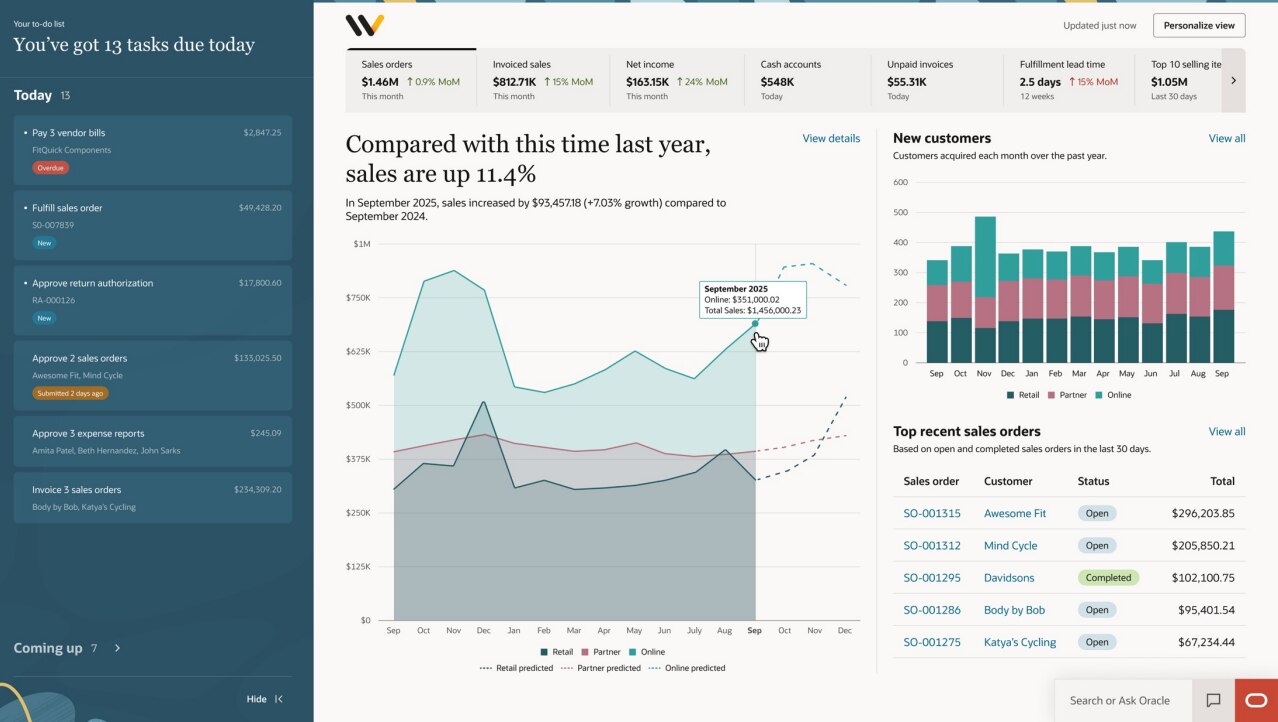
These strategies are only as good as the systems a bank runs them on NetSuite ERP Software for Financial Services. brings finance and operations onto one AI cloud platform with reporting built in, so the numbers behind a compliance return, a risk check and a client’s question all come from the same place. Automated reporting and audit-ready records cut the manual effort that drives up compliance cost, and live dashboards give leaders a current view of exposure and performance rather than a month-end reconstruction.
Built-in AI does more than find anomalies. NetSuite’s embedded AI agents can handle routine back- and middle-office tasks from start to finish, from reconciling accounts to capturing invoice data, and passing on any exceptions that need a person’s judgement. That lowers the cost of each task and frees people for higher-value work. And because new capabilities draw on a firm’s existing data, the suite grows with the business as it adds entities or moves into new markets.
NetSuite for Financial Services
Keeping up with such a wide-ranging slate of challenges is hard enough for most investment banking institutions. The rapid rate of change in technology and regulatory scrutiny only hikes up the pressure. The banks handling the environment best are changing how their business works. They’re also laying technology foundations they can build one step at a time rather than betting the firm on one grand overhaul. That is what turns a relentless list of problems into manageable change.
Challenges in Investment Banking FAQs
What are the biggest challenges facing UK investment banks?
There’s no single hot-button issue straining UK banks. The most burdensome challenges are rising regulatory cost and the drain of capital from public markets into private hands. Thinner margins, burnout and cyber threats follow close behind.
What cybersecurity threats do investment banks face?
Banks contend with a broad range, including credential theft, cyber-enabled fraud and AI-augmented attacks, but ransomware remains one of the most damaging. Increasingly, the danger enters through the supply chain rather than the front door, with attackers exploiting a smaller vendor to reach the institution behind it.