
The UK wealth management market remains broadly stable, but changing client expectations, tighter margins, evolving regulation and new technology make running the business increasingly demanding. Firms must manage these tensions while trying to grow, and without increasing the overall cost of serving clients.
These pressures are closely connected. Tax changes can create additional planning and review work, growth can expose weaknesses in data and processes and new technology can introduce governance requirements alongside potential efficiencies. Consolidation and an ageing workforce also affect how firms build capacity and compete for clients.
Key Takeaways
- A shrinking number of advice firms and an ageing advisor workforce mean the sector is consolidating while also planning for succession.
- From 2027, the treatment of most unused pension funds for Inheritance Tax will make change pension and estate planning for clients with inheritable pension wealth.
- AI adoption among UK advice firms is real but uneven: Larger firms are further along, while smaller firms are still deciding where it fits and whether it’s worth the investment.
- As wealth passes to a new generation, firms without a deliberate plan for engaging heirs early may struggle to retain those relationships after inheritance.
The Modern Wealth Management Landscape is Changing
The Financial Conduct Authority (FCA) estimates that 31,000 registered financial advisors work in the UK, serving 4.1 million individual investors with around £1 trillion in assets under advice. At the same time, the number of firms providing financial advice has fallen 15% since 2021, to around 5,500. The result is a market that is stable but becoming more concentrated: Firms with more than 50 advisors represent around 1% of advice firms but account for half of client assets, the FCA reports.
That structural shift is happening alongside new demands on both clients and firms. The tax treatment of pensions is changing. From April 2027, most unused pension funds and pension death benefits will fall within the value of a deceased person's estate for Inheritance Tax purposes. At the same time, intergenerational wealth transfer creates an opportunity to build new client relationships, and a risk of losing relationships after bereavement. In a March 2026 roundtable, the Chartered Insurance Institute (CII) found that 55% of firms are concerned about losing clients after bereavement, while 44% have an intergenerational advice strategy in place.
Technology is another part of the picture. The FCA describes technology and AI adoption in the advice market as uneven but increasingly important, with firms at various stages of deciding where new technology can improve how they deliver advice and run their businesses.
10 Challenges in the Wealth Management Sector
The pressures facing wealth management firms are interconnected. Changes in the client base and service expectations affect how advisors work; regulation and tax requirements add to the operational burden; technology, data and productivity increasingly influence how much firms can deliver with the people and resources they have. The following 10 challenges examine how these pressures affect client service, firm economics and day-to-day operations.
-
Growing Service Expectations
Even as firms work to better serve existing clients, they seek growth by making advice accessible to a broader range of clients. Many firms set minimum investable-asset thresholds, which can leave some inheritors and other mass-affluent clients (typically defined as people with £50,000 to £5m in investable assets) without access to regulated advice. That matters because FCA research finds that receiving financial advice is correlated with an increase in wealth, with the relationship particularly relevant for people receiving lump sums such as inheritances. At the same time, clients increasingly expect support that extends beyond investment management, including later-life and intergenerational wealth planning. For firms, the challenge is meeting a broader range of needs without making client relationships more expensive to serve.
-
Digital Transformation and Technological Change
Wealth management firms rarely ask whether to use AI; they have moved on to deciding where it can add value without introducing risks. Automation can take on increasingly practical work, from transcribing meeting notes and extracting data to drafting client communications and conducting compliance monitoring. But adoption is only part of the challenge. Firms also need to decide which tasks can be automated, where human judgement remains essential and how to maintain appropriate oversight when technology is embedded in the advice process. Technology investment is as much a question of governance, integration and workflow as it is about choosing the tools.
-
Margin Erosion
Margin pressure in wealth management rarely comes from one direction. Fee compression puts pressure on revenue growth in parts of the wealth management market, while the cost of delivering advice continues to rise. Compliance, reporting, technology and other operational requirements all add to the cost base, making it harder for firms to protect margins through pricing alone. That puts greater emphasis on the cost to serve clients: Firms need to understand where time and resources are spent within the client lifecycle and where better processes can reduce the work required to deliver the same level of service.
-
Evolving Tax Landscape
Tax planning is becoming harder to treat as a periodic exercise. Capital Gains Tax rates increased in 2024, and changes to Agricultural Property Relief and Business Property Relief that took effect in April 2026 mean that some assets which once benefited from more generous Inheritance Tax treatment may now require closer review.
From April 2027, most unused pension funds and pension death benefits will also come within the scope of Inheritance Tax. For advisors, the issue is less about any single rule than their cumulative effect. Plans built around assumptions held a few years ago may need to be revisited, particularly where clients have pensions, business interests or agricultural assets. Firms also need the capacity to identify affected clients, assess the implications and act appropriately as circumstances evolve.
-
Increasing Regulatory Requirements
AI tools for wealth management are raising new questions around oversight, accountability, data and client outcomes, even where existing frameworks such as Consumer Duty and the Senior Managers and Certification Regime already apply. Firms that choose to offer “targeted support”, which became a new regulatory framework in April 2026, can provide ready-made suggestions to groups of clients who share a financial need or objective without conducting full individual assessments. The opportunity to serve more clients without adding resources comes with requirements around segmentation, governance, monitoring and disclosure. Keeping policies, controls and supporting evidence aligned with all relevant requirements increases the operational demands of running a compliant business.
-
Advisor Capacity and Skills Gaps
Succession is becoming a bigger consideration for UK wealth management firms. As experienced advisors approach retirement and firms work to develop the next generation, maintaining capacity means transferring institutional knowledge before it is lost. At the same time, the skills required to serve clients are broadening as wealth passes between generations. CII research found that advisors see navigating family dynamics and building relationships with inheritors as among the hardest parts of this work, while fewer than 40% of firms have a strategy for engaging adult children with limited financial expertise. Firms therefore need to develop both advisor capacity and the relationship-management skills required to serve a broader set of clients.
-
Market Pressures
Interest rates and market volatility can affect client behaviour as well as portfolio performance. Higher rates have made cash and cash-like assets more attractive for some investors, leaving firms with a larger pool of assets that may sit outside long-term investment strategies. Market volatility creates a different challenge, it increases demand for timely communication and puts greater pressure on advisors to explain portfolio decisions when clients are most likely to question them. Firms need clear processes for managing client communication and investment decisions through different market conditions, while recognising that the right response will depend on each client's circumstances and objectives.
-
Productivity Constraints
Advisors spend significant time on reporting, compliance documentation and other administrative work that sits alongside client-facing activity. The less time advisors have for client-facing work, the harder it is to grow revenue or serve more clients without increasing headcount. Improving productivity therefore depends on reducing manual, repeatable work, particularly where advisors need to gather, re-enter or reconcile information before they can focus on the client.
-
Data Visibility
Wealth management firms often store client, portfolio and reporting data in multiple systems built at different times. If they exist, many of these system integrations are only partially implemented or are difficult to maintain. This can make it hard for advisors to get a current view of a client relationship without manual work, from reconciling numbers between systems to re-entering information the firm already holds elsewhere. Inconsistent or fragmented data can also make it challenging to monitor and document consistent client outcomes. The data visibility problem can become more pronounced after an acquisition or merger when combining different systems, data structures and processes.
-
Intensifying Competition
Competition in UK wealth management comes from several directions. As wealth management firms grow by acquiring smaller practices, they gain resources to invest in technology, client service and further growth, raising the competitive bar for smaller and standalone firms. Meanwhile, banks and digital investment platforms are expanding investment offerings, competing for assets and client relationships, potentially without replicating the traditional wealth-management model. That puts pressure on established firms to demonstrate the value of their service while keeping its costs under control. Differentiation increasingly depends on the experience a firm provides and how efficiently it can deliver it, not simply the products it offers.
The Role of Software in Reducing Friction for Advisors and Firms
Software can reduce operational friction by connecting information and processes that would otherwise require staff to move between systems manually. This can mean bringing client and financial information together, so advisors and other teams can access the information they need without checking multiple applications or reconciling records by hand.
That same connectivity can simplify processes such as reporting and compliance documentation. Automating routine data gathering and other repeatable tasks can reduce the administrative work involved in serving each client. This makes it easier for firms to support growth without simultaneously increasing headcount. It also gives managers a clearer look at where time is spent, helping identify opportunities to improve processes and control cost to serve.
Software has a role in AI governance, too. Wealth management firms adopting automation must define which tasks technology can handle, where human review remains necessary and how activity is recorded, so they can maintain oversight of processes that affect clients. Systems that provide clear records of automated activity and human intervention make it easier to review how those processes are working and demonstrate that appropriate controls are in place as firms expand their use of AI.
Finance Futures: Tomorrow’s Vision

Grow Your Firm with Confidence with NetSuite ERP
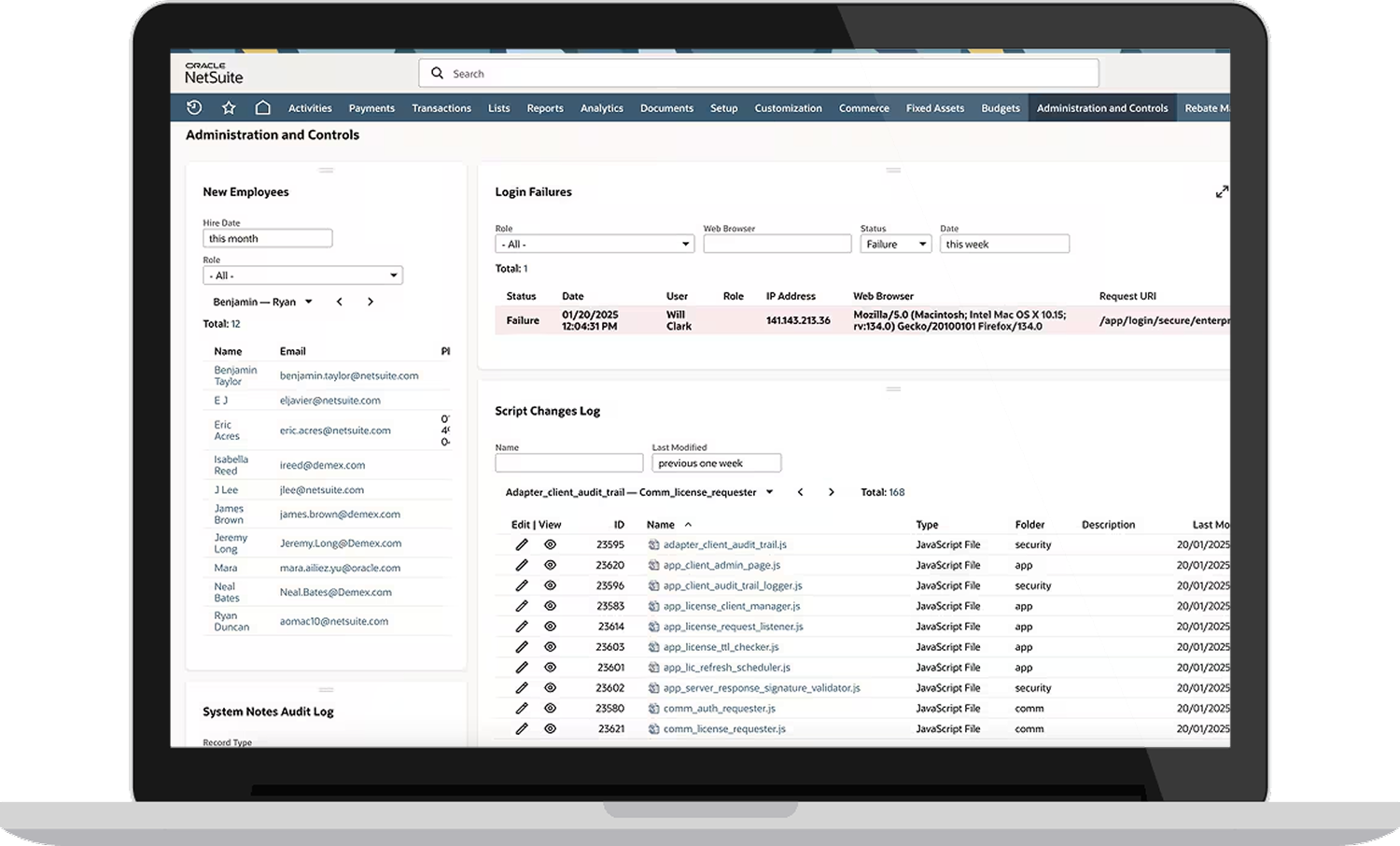
NetSuite ERP Software for Financial Services brings disconnected financial, billing, customer and compliance data into one connected platform, providing a consistent, current view of clients and performance along with the audit trails regulators expect. AI-assisted reconciliation and automated reporting reduce the manual work behind period-end close and compliance documentation, freeing time for client-facing work. And because NetSuite can add entities, products and geographies without a full system replacement, firms growing through acquisition can bring a newly acquired book of business onto the unified platform rather than adding another system.
NetSuite ERP Software Administration and Compliance Dashboard
The UK wealth management industry is, by the numbers, stable. Advisor headcount is holding steady and assets under advice are continuing to grow. Yet individual firms are managing several fundamental pressures simultaneously. Consolidation is reshaping ownership; pension tax rules are changing routine retirement conversations; rising client expectations, regulatory demands and margin pressures are making it harder to increase services efficiently. Responding to those pressures increasingly depends on how well firms can rely on their people, processes, data and technology to maintain service quality, control costs and adapt as client and regulatory needs evolve.
Discover how NetSuite ERP benefits the Financial Services sector here. (opens in new tab)
Wealth Management Challenges FAQs
What are the challenges facing the UK wealth management sector?
UK wealth management firms are managing several shifts at once: a changing client base as wealth passes to a new generation, a wave of tax and pension rule changes, tighter margins, growing regulatory requirements and advisor capacity strained by retirements and administrative work.
What role does technology play in modern wealth management?
Technology helps firms bring client, portfolio and compliance data into a consistent view, reducing the manual work behind reporting, reconciliation and regulatory documentation. It supports advisor capacity by automating repeatable tasks, although decisions about oversight, data quality and where automation is appropriate still require human judgement.