
Net profit margins for restaurants often land in the low single digits — and rising labour, food, and energy costs threaten to push them lower. Tracking the right metrics is essential, but the effort can be futile if you don’t know what numbers to shoot for. Benchmarks provide that context. They’re the reference points that show how your performance compares to your own history, your competitors and the broader industry.
What Are Restaurant Benchmarks?
Restaurant benchmarks are the statistics and ratios operators use to evaluate restaurant performance against industry standards. They usually cover financial performance, operational efficiency and customer satisfaction — the three areas that determine whether a restaurant thrives or struggles.
Key Takeaways
- Restaurant benchmarks compare your numbers to your own history, competitors and industry standards to show whether a restaurant is healthy, lagging or ahead.
- This insight can help operators navigate tight margins, rising costs, staffing challenges and the risk of insolvency.
- Accurate benchmarking uses data from similar restaurant types and is cross-checked against multiple sources.
- Integrated software makes benchmarking practical by connecting the systems that generate business data and track relevant metrics.
Hospitality Futures: Tomorrow’s Vision
Discover how technology and AI are reshaping the sector, strategies to build resilience, foster loyalty, drive value for the next decade, and so much more.

Restaurant Benchmarks Explained
Operators can compare benchmarks to their own historical data or against external norms, but ideally both. A regional restaurant group might measure a certain location’s net margin, staff turnover and guest satisfaction against group averages and broader full-service indicators, then decide whether that site needs operational changes or additional investment. Industry standards typically come from data published by analysts, insurers and technology vendors. UK-specific sources include UK Hospitality, CGA and trade publications like The Caterer. Operators often adjust these figures based on their competitive environment, either through independent research or by working with consultants and analytics platforms that specialise in hospitality data.
The value of benchmarking extends beyond internal comparison. Investors, lenders and insurers increasingly rely on benchmark data — particularly prime cost, EBITDA margin, leverage and labour-cost ratios — when evaluating UK restaurant businesses. At the site level, clear targets give managers and teams tangible goals and support structured improvement efforts.
Why Should Restaurants Set Benchmark Targets?
Although the UK full-service restaurant industry was worth £24.7 billion in 2025, it’s characterised by tight margins and a high rate of closures. Rising costs continue to squeeze profitability, and staffing challenges persist — restaurants and cafes experience annual employee turnover of nearly 40%. Under these conditions, small variances in key metrics can have outsized effects. Consider a restaurant operating at a 4% net margin. If food costs creep from 30% to 32% of turnover because of supplier price increases, half of that profit disappears. A food cost benchmark would have flagged the drift early, giving the operator time to renegotiate with suppliers, adjust portions or reprice the menu. That's why benchmark targets matter: they create concrete goals that teams can work toward, and because they tell operators whether their performance is on track.
Benchmarks also support strategic decision-making by revealing which parts of the operation deserve attention and investment. A business focused on stabilising financial performance might prioritise gross profit margin and prime cost, while a growth-oriented brand could focus on net promoter score (NPS) and online review scores.
The use of benchmarks also demonstrates financial discipline to external stakeholders, which can strengthen an operator's position when negotiating financing, lease terms, supplier credit or even a sale.
16 Restaurant Metrics that Benchmark Performance
The metrics below are grouped into three categories. Financial benchmarks cover profitability, cost control and cash flow — the numbers that show whether the business model works. Operational benchmarks measure how efficiently a restaurant uses its seating, inventory and staff. Customer satisfaction benchmarks track how guests perceive the experience and whether they come back. Each plays a different role in assessing overall performance. Taken together, they reveal strengths, weaknesses and where to focus.
Financial Benchmarks
Financial benchmarks answer essential questions about pricing effectiveness, cost control, and profitability. Most of these metrics appear on profit and loss statements and balance sheets. Operators should review them at least weekly, because even small improvements can benefit margins.
-
RevPASH
RevPASH, short for revenue per available seat hour, measures how much turnover each seat generates per hour. In other words, how effectively a restaurant monetises its physical space during specific time periods. It reveals whether busy periods, such as pre-theatre service or Sunday lunch, are performing above or below expectations compared to past performance or similar restaurants. For example, a 60-seat restaurant generating £3,600 between 18:00 and 22:00 achieves a RevPASH of £15. Whether that’s strong depends on the concept and location; operators tend to track RevPASH over time and compare it against competitors. Adjusting reservation policies, seating arrangements and pricing strategies can all help improve revenue.
-
Free cash flow margin
Free cash flow margin measures the percentage of turnover that remains as discretionary cash after covering operating expenses and capital expenditures. It shows how efficiently a business converts sales into cash available for distributions, reinvestment, accelerated debt repayment, building reserves and the like. With rising costs for ingredients, labour and energy, not to mention high failure rates throughout the industry, maintaining healthy free cash flow has become an increasingly important measure of resilience.
Benchmark figures vary by concept, growth stage and goals. A fast-casual group opening new sites will likely show low or negative free cash flow, because the investment eats into it. An established independent focused on stability would likely aim for consistent positive free cash flow to build reserves.
-
Cost of goods sold (COGS)
COGS measures what a restaurant spends on the ingredients, beverages and packaging that go into each sale. It’s usually expressed as a percentage of turnover, showing what portion of each pound goes toward product costs. UK restaurants generally target COGS between 25% and 35% of turnover. Tracking COGS separately for food, beverages and other categories — rather than as a single overall number — helps operators isolate problems. Overall COGS might look healthy at 30%, but a category-level view could reveal food costs creeping up while beverage sales mask the issue.
-
Gross profit margin
Gross profit margin reflects how effectively a restaurant converts turnover into profit after direct costs. It shows how much money remains to cover wages, rent, utilities and other operating expenses. GPM excludes labour and overhead, so a strong gross margin doesn’t guarantee profitability — but a weak one almost certainly signals trouble.
Industry guidance for UK restaurants targets gross margins around 70%. This figure assumes a balanced sales mix including beverages; food-only operations typically target 60–65% gross margins. Restaurants falling significantly below these levels may need to revisit pricing, menu engineering or supplier negotiations.
-
Net profit margin
Net profit margin shows what percentage of turnover remains after a restaurant pays all its expenses — not just food and labour, but also rent, utilities, marketing and everything else. In the UK, high occupancy costs, energy prices and wage pressures often push full-service restaurant margins into the low single digits; recent industry data puts the UK average around 4%. Because so little falls to the bottom line, small improvements in other metrics, such as shaving a percentage point off food costs or increasing average spend per head, can have a meaningful effect on net income. Many operators set tiered targets (e.g., a minimum acceptable level, a realistic goal and a stretch target) and review site performance against these regularly.
-
Prime cost
Prime cost combines a restaurant’s two largest expenses, COGS and labour (including wages, benefits and payroll taxes), and expresses them as a percentage of turnover. It should generally fall in the 60% to 65% range, with full-service restaurants often landing toward the higher end due to heavier staffing requirements. Because prime cost commonly accounts for more than half of every pound a restaurant takes in, it's often the first number operators and lenders examine when diagnosing profitability problems.
Operational benchmarks
Financial metrics alone don’t paint a full picture of performance. Operational benchmarks measure how efficiently a restaurant deploys seating capacity, inventory and staff to generate revenue and deliver consistent guest experiences. They indicate how smoothly the business runs, uncover unnecessary costs and missed revenue opportunities, and identify specific processes that need attention.
-
Table turnover rate
Table turnover rate measures how many times each table is occupied during a service period. In busy urban markets, casual-dining restaurants often target two to three turns per table during peak evening services, while quick-service and fast-casual concepts expect significantly higher rates. Higher turnover increases revenue, but rushing guests hurts the experience and discourages return visits. Clear service standards, efficient reservation systems and easily digestible menus can help operators strike the right balance.
-
Inventory turnover ratio
Inventory turnover ratio shows how quickly a restaurant sells and replenishes its stock. A higher ratio generally indicates efficient stock management and lower risk of spoilage, while a low ratio may signal overstocking or weak sales. The optimal inventory turnover for restaurants is typically between four and eight times per month, but it depends on the type of establishment and other factors. For example, venues using more perishable, fresh ingredients should expect higher turnover. That said, very high turnover can mean inventory is too lean, risking stockouts during busy periods.
-
Employee turnover ratio
Employee turnover ratio measures the rate at which staff leave. Hospitality has the highest employee turnover ratio of any UK industry. While 25% is cited as a realistic target for restaurants, the actual rate averaged 39% in 2024; a gap that increases recruitment and training costs while hurting service quality. Offering competitive pay, flexible scheduling, regular recognition and feedback, and clear advancement opportunities can help close that gap.
-
Per-guest average
Per-guest average, also called average spend per head, measures how much each customer spends. Tracking it over time shows whether upselling efforts, such as suggesting starters, wine pairings or desserts, are working. It also helps identify high-performing servers whose techniques can be shared with the team. Targets vary widely by concept, but tracking the trend matters more than hitting a specific number. A rising per-guest average usually signals successful upselling or menu optimisation; a falling one may indicate customers are trading down.
-
Days in inventory
Days in inventory measures how long stock sits before being sold. Because the result is expressed in days, it's easy to compare against shelf life — if fresh meats are averaging three days when the shelf life is four, there’s little margin of error. Days in inventory also helps pinpoint slow-moving items that may need to be promoted, repriced or removed from the menu. Restaurants typically set category-level targets to benchmark against: fresh produce should turn over faster than dry goods, for instance. This balances freshness and waste reduction against the risk of running out during busy periods.
Customer satisfaction benchmarks
Customer satisfaction benchmarks measure how guests perceive their experience and how likely they are to return or recommend the restaurant to others. Satisfied guests come back more often, bring friends and leave positive reviews — all of which drive revenue. Dissatisfied guests do the opposite. Their negative reviews can reduce a restaurant’s visibility on platforms such as Google and Tripadvisor, which makes it harder to attract new customers in the first place.
-
Customer acquisition cost (CAC)
CAC quantifies how much a restaurant spends to attract each new guest by dividing total marketing and promotional spend by the number of new customers acquired. These calculations should include digital advertising, promotions and third-party delivery platform commissions, which are easy to overlook but can add up quickly.
Many operators segment CAC by channel — search ads, social media, email campaigns, marketplace listings — and compare each against customer lifetime value. This helps them shift budget toward the most profitable channels. For example, if a channel has higher acquisition costs but reliably brings in guests who spend more and return frequently, it may be a better investment than a cheaper channel that attracts one-and-done visitors.
-
Net promoter score
NPS measures how likely guests are to recommend a restaurant to others, expressed as a score from -100 to +100. Scores above 50 are generally considered excellent, but operators tend to benchmark against their own history and competitors in the same segment rather than chasing a universal target. A rising NPS suggests guests are becoming more loyal; a falling one warrants investigation, and pairing the score with open-ended feedback helps pinpoint why.
-
Repeat customer rate
Repeat customer rate measures the percentage of guests who return within a defined period. Loyalty runs deep; even when they can’t get a reservation, 35% of UK diners look for a different date at the same restaurant rather than going elsewhere. This translates directly into more predictable revenue.
Rather than targeting a universal repeat customer rate benchmark, operators should evaluate themselves based on concept. For example, a neighbourhood bistro with regulars will naturally have a higher frequency of repeat customers than a destination restaurant in a tourist area. Loyalty programmes and personalised communications that remind guests to come back can help improve repeat rates. Tracking redemption and response rates shows which efforts actually encourage visits.
-
Customer retention costs
Customer retention costs measure what a restaurant spends on loyalty programmes, targeted offers, CRM tools and other efforts to keep existing guests coming back. The goal is to benchmark retention spending against the cost of acquiring new customers. For example, if it costs £5 in retention efforts to generate an additional visit from an existing guest, but £15 in marketing to bring in a new one, retention is the better investment. This gap can widen further when new customers arrive via third-party delivery platforms, where commissions eat into margins on those orders.
-
Online review scores
Online review scores on platforms such as Google, Tripadvisor and delivery apps directly influence how potential guests discover and choose restaurants. Restaurants rated below 4 stars are often skipped in search results, making scores above that threshold essential for visibility. It’s common for operators to mine review text for recurring themes and make specific changes in response, such as adding staff during peak hours if reviews mention slow service, or retraining front-of-house teams if guests cite unfriendly interactions. Operators can then track whether those improvements lift average scores.
Restaurant Benchmarking Challenges
Benchmarks are useful, but only when applied correctly — and that’s harder than it sounds.
The first challenge is data fragmentation. Many independent operators track sales in one system, inventory in another and labour costs in a spreadsheet. Pulling these together to calculate metrics such as prime cost or RevPASH requires manual effort, and manual effort introduces errors. Without integrated systems, the data needed for reliable benchmarking may not exist in usable form.
The second challenge is comparability. A Liverpool fine-dining restaurant and a regional pub operate under different economics; different rent burdens, pricing power, service models and customer expectations. A table turnover benchmark derived from fast-casual data won't apply to a fine-dining concept where guests expect leisurely two-hour meals. Missing that target doesn’t indicate poor performance; it indicates that the benchmark wasn’t designed for that type of restaurant.
The third challenge is obsolescence. Rising labour costs, supplier price inflation and energy expenses can shift cost structures quickly. A prime cost that hit the 60% target six months ago may now exceed 65%, not because operations deteriorated, but because input prices have moved.
Comparing Your Benchmarks to Industry Standards
Once internal data is reliable, operators can compare it to external standards. UK-specific benchmarks are more useful than global averages, and data from similar restaurant types, matched by concept, pricing and geography, will produce more meaningful comparisons than broad industry benchmarks. Cross-checking multiple sources can help identify where consensus exists on what “good” looks like.
Industry reports typically present ranges — lower quartile, median and upper quartile — rather than single targets. Where a restaurant aims within that range depends on its goals. Median performance may suit a business focused on stability, while a growth-oriented operator might aim for the upper quartile.
Tips for Setting Effective Benchmark Targets
Knowing how to compare benchmarks is one thing; choosing the right targets is another. The following tips can help operators set targets that are realistic, relevant and tied to meaningful action:
- Identify which metrics matter to your objectives: The right benchmarks depend on what you’re trying to achieve. An operator focused on cost control might prioritise prime cost, COGS and inventory turnover. One focused on guest experience might track NPS, repeat customer rate and review scores. And one preparing for outside investment might emphasise the metrics lenders scrutinise like free cash flow, net profit margin or prime cost.
- Tailor your targets to your competitive environment: Competitive context shapes which benchmarks matter most. A restaurant facing heavy competition from delivery apps might prioritise CAC and retention costs. One competing on dine-in experience might focus on NPS and repeat customer rate. A value-focused spot in a crowded market might watch prime cost and table turnover more closely.
- Balance the number of financial and operational metrics you track: Putting too much weight on short-term financial targets can lead to cuts that damage guest or staff experience, and those losses eventually show up in satisfaction scores, reviews, and retention rates. Tracking both financial and experience-based metrics helps protect profitability and brand strength.
- Focus on metrics that provide actionable insights: When a metric moves in the wrong direction, operators should be able to investigate why and identify potential responses. If a metric isn’t connected to any lever the business can pull, it may not be worth the effort to track.
- Use reliable sources: Operators should consider how data was collected, how recent it is and whether sample sizes are meaningful. UK-specific sources, such as trade bodies like UK Hospitality, publications like The Caterer and hospitality software providers, tend to be more relevant than generic global figures. And internal data should be accurate before using it for external comparisons.
- Review and adjust targets regularly: Cost structures and consumer behaviour shift quickly, so a target that made sense six months ago may no longer apply. Reviewing benchmarks quarterly can keep them realistic and relevant.
How Does Software Help Restaurants Benchmark Metrics?
Modern software plays a central role in making benchmarking practical. Crucially, software such as ERP platforms can address the data fragmentation problem that makes benchmarking difficult for many operators. Instead of pulling numbers from separate POS, inventory and scheduling systems, these platforms consolidate sales, costs and workforce data in one place. This makes it possible to calculate metrics like RevPASH, prime cost and inventory turnover without manual reconciliation. Many ERP systems also offer real-time dashboards that can display benchmark metrics and targets automatically. Managers can, in turn, monitor critical indicators, identify changes in performance quickly and take corrective actions before small variances become significant problems.
In the same vein, inventory and workforce management tools can readily provide the operational data restaurants need for internal tracking, while giving operators a foundation for external comparisons when industry benchmarks are available.
Identify and Analyse Restaurant Benchmarks with NetSuite
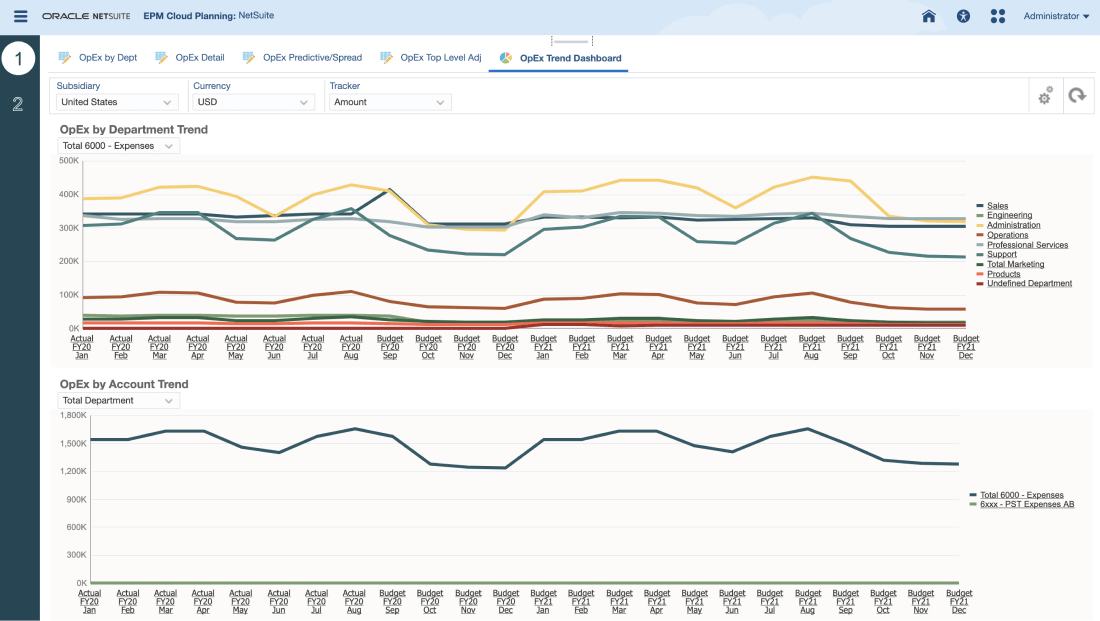
NetSuite Restaurant ERP gives restaurants a real-time look at performance, from a consolidated view down to individual transactions. Role-based dashboards with preconfigured KPIs let managers monitor benchmarks without building reports from scratch, while drill-down capabilities make it easy to investigate variances when metrics move off target. And because the platform integrates with inventory and CRM systems, operators get a single source of data — no more pulling numbers from disconnected tools. The result is benchmarking that’s built into daily operations, not performed as a periodic exercise.
Track Growth Drivers with NetSuite
Restaurant benchmarks give UK operators the insights needed to protect margins, increase efficiency and deliver better guest experiences in a challenging market. By tracking financial, operational and customer satisfaction metrics systematically — and comparing them against industry standards — restaurants can identify specific areas for improvement and measure progress over time. As software adoption grows, more restaurants will be able to embed benchmarking into daily decision-making. But operators who know how to choose the right metrics, compare them to industry and internal standards, and access reliable data will be in a better position to turn that data into a competitive advantage.
Oracle NetSuite Hospitality Masterclass
See NetSuite Hospitality in action here (opens in a new tab).
Restaurant Benchmarks FAQs
What are 5 key metrics commonly used to measure restaurant performance?
Five key metrics for measuring restaurant performance include:
- Gross profit margin
- Prime cost
- Inventory turnover ratio
- Employee turnover ratio
- Net promoter score (NPS)
Together, these provide an overview of financial health, operational efficiency, workforce stability and customer satisfaction.
What is a good current ratio for a restaurant?
A good current ratio for a restaurant sits above 1.0, which indicates the business can cover its short-term liabilities with current assets. Industry data suggests that only top-quartile operators consistently exceed this threshold.
What is a good operating margin for a restaurant?
A good operating margin for a UK full-service restaurant typically falls in the low-to-mid single digits, with many operators targeting 5% to 10% depending on concept and location. Fine-dining establishments may achieve higher profitability, while high-volume, lower-price concepts often operate with tighter margins but higher turnover.
What are typical profit margins for a restaurant?
Typical net profit margins for a UK restaurant are in the low single digits. Industry data suggests an average of around 3–5% for full-service restaurants, while well-run fast-casual restaurants can reach closer to 10% — though margins at this level are more common among larger restaurant groups than independents. Gross profit margins typically target around 70% across the sales mix when beverages contribute to revenue.